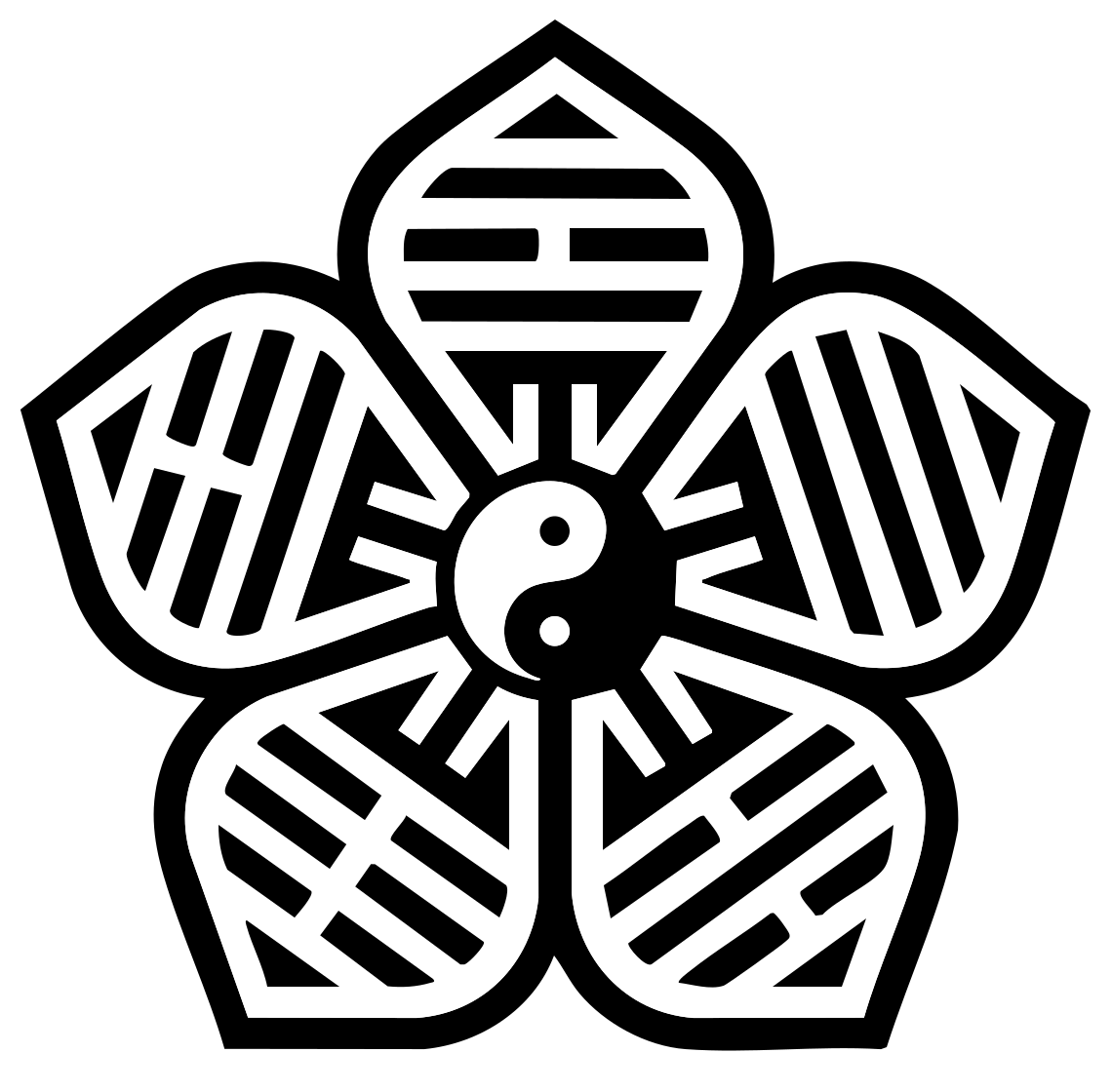
Trigram breakdown
Upper · Water · 坎
Yang held inside two yins. The hidden current; danger and depth at once.
Lower · Fire · 離
Yin held inside two yangs. Light that needs fuel; clarity that can dazzle.
Judgment
Every line in its proper place, every element in balance - this is the rare moment of complete alignment. But Kan (water) above Li (fire) is not a stable resting state: water sinking and fire climbing press into one another, and the exchange that produced completion is also what consumes it. This hexagram demands vigilance precisely because everything looks finished, warning that the greatest danger follows success when attention relaxes and entropy begins its quiet work.
Image
Water sits above fire, and for a moment the cooking is perfect - the heat rises exactly as needed, the water neither evaporating away nor extinguishing the flame. But a fire left untended will cool, and water left uncontained will spill, so the lesson of this image is that completion is a process to maintain, not a trophy to set down.
Essence
Character
This person brings big things to a clean close. They see how the pieces fit and tie off the loose ends others leave hanging. The gift is real. Work they finish tends to hold. The trouble is that the finish does not feel like an ending to them. Before anyone has clapped, they are testing the joints and picturing the collapse. Often they are right. But the checking never stops, so they cannot enjoy what stands done, or they pick at it until it frays. The small turn is to name a point where the work counts as finished. Then they check once, fix what is real, and let the rest be.
With other people
Among others, this person is the one who quietly walks the rooms while the group celebrates. They catch the flaw nobody wanted to hear about. That can feel like a chill on a good moment. Others come to trust it, though. When they say a thing is sound, people believe them. They are at their best when they share the praise first and the warning second.
Water over Fire
Fire inside keeps pushing upward for the next thing to perfect, while Water outside presses down with caution, and the two hold each other in a tense, useful balance.
The six lines
Hexagram 63 Line 1 (63.1)
A yang line in the first earth position carries forward momentum just as completion is reached. The instinct to keep pushing must be checked here - braking at the right moment prevents the overshoot that turns triumph into loss.
Hexagram 63 Line 2 (63.2)
A yin line in the second earth position holds its place with quiet patience rather than pressing forward into recognition. This receptive strength is correct here: premature initiative risks disrupting an order that is working exactly as it should.
Hexagram 63 Line 3 (63.3)
A yang line in the third position at the threshold of human action brings the energy to consolidate hard-won gains. The effort required now is real and demanding, but cutting corners in the final securing of things invites the slow unraveling that undermines everything built before.
Hexagram 63 Line 4 (63.4)
A yin line in the fourth position signals that the integrity of the structure needs honest inspection. Even in completion, weak points exist where deterioration will begin first, and acknowledging them now is wiser than maintaining a comfortable illusion of permanence.
Hexagram 63 Line 5 (63.5)
The yang ruler's line at the fifth position holds authority at the peak of achievement. True leadership here is simple sincerity rather than elaborate display - the genuine offering matters far more than its ceremonial packaging, and pretension at this height is the first crack in what was solid.
Hexagram 63 Line 6 (63.6)
A yin line at the very top represents the moment completion tips into its opposite. Like someone wading deeper into water even after safely crossing, there is a dangerous tendency to test the achieved state one step further, and that final unnecessary step is precisely where reversal begins.
Keywords:
- completion
- vigilance
- equilibrium
- entropy
- consolidation
Relationships
Opposite
Before Completion
The hexagram with every line flipped - its energetic mirror.
Inverse
Before Completion
The hexagram read from the top down - its reverse-perspective.
Reverse
Before Completion
The hexagram with upper and lower trigrams swapped - the inside turned out.
Nuclear
Before Completion
The hexagram built from the inner four lines (2-3-4 below, 3-4-5 above) - its inner architecture.
Family
The eight-hexagram palace it belongs to - kin generated by sequential line changes from a pure-trigram source.
Gate 63 in Human Design
In Human Design, Hexagram 63, After Completion, is Gate 63, with the same six lines. It sits in the Head Center, and its one channel connects it to Gate 4 in the Ajna Center. How to read your gates in the I Ching
The reading goes further down
What you have read here is the shape of Hexagram 63, 'After Completion'.
Underneath it sit four more: the mechanic that drives it, the shadows it casts, the way through them, and the tension between Water and Fire that never quite settles.
And if this hexagram appeared in your Birth Hexagram Triad, one of its six lines is changing. That line is your growth edge, named out loud.