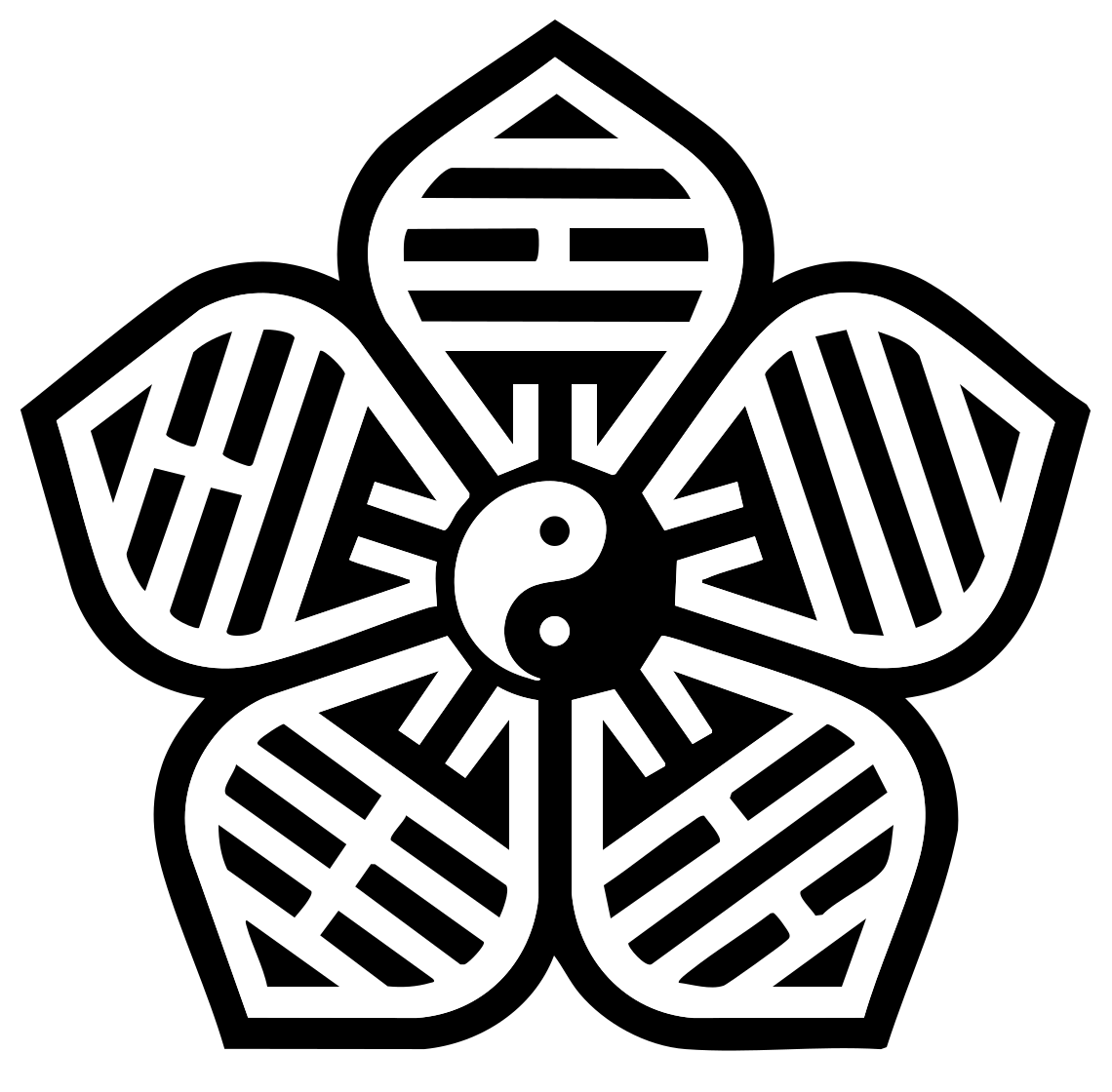
Trigram breakdown
Upper · Lake · 兌
Yang doubled below, yielding above. Joyfulness that overflows its banks.
Lower · Water · 坎
Yang held inside two yins. The hidden current; danger and depth at once.
Judgment
The lake above has drained away, leaving the water below trapped with nowhere to rise. 'Oppression' names the condition of genuine constraint, where real capacity is hemmed in by circumstance and words cannot break through the walls. What this hexagram demands is not a solution but a quality of character, the ability to hold your center when the situation refuses to yield. The one who survives oppression intact is the one who does not mistake the constraint for a verdict on their worth.
Image
A lake sits above, but its water has seeped downward through the basin, leaving the lake dry and the depths below flooded but sealed. The water has lost its natural channel and cannot find the sky. This image teaches that when resources drain away and expression is blocked, the work is not to force an outlet but to conserve what remains and wait for the basin to shift.
Essence
Character
This person keeps going when everything around them narrows. They waste little. They use fewer words and fewer moves, and they put on no show of struggle. Hardship does not rattle them, because they have already learned what matters once the extras are gone. Deep feeling and real capacity sit inside them, but the way out is blocked, so little of it reaches the surface. That is the cost. Squeezing becomes normal, and they keep gritting their teeth after a door has opened. They stop expecting help, so they miss it when it comes. They end up carrying things alone. Their way through is to save their strength, hold their center, and remember that a tight season is not a verdict on their worth.
With other people
In a group, this person becomes the steady one who does not complain and does not leave. Others lean on that calm without seeing what it costs. The catch is that their needs go unspoken, so no one offers help. At their best, they say one plain sentence about what is wrong and let others respond. Their endurance then becomes a shared strength instead of a private burden.
Lake over Water
Water within gives them deep reserves and a habit of pressing on, while Lake without promises easy speech but runs dry, so little of what they carry gets said.
The six lines
Hexagram 47 Line 1 (47.1)
A yin line at the very base of oppression, soft and yielding precisely when the ground itself is unstable. This is the moment of first contact with the constraint, and the danger here is sinking into it, accepting the walls as permanent before you have even tested them. The risk is not defiance but premature collapse, giving up on movement before movement has truly been tried.
Hexagram 47 Line 2 (47.2)
A yang line in the second position holds genuine strength, but here that strength is hemmed in from above and below, unable to find a clean outlet. Food and drink are present but surrounded by difficulty, the resources exist but cannot be freely used. This is not a time to force expansion but to sustain yourself carefully within the available space, trusting that the constraint is not permanent.
Hexagram 47 Line 3 (47.3)
A yin line in the third position, the lower of the two human positions, carries the weight of someone who acts without the footing to support the action. Pressing against stone and grasping at thorns, every move here meets resistance and every attempt at relief creates new friction. The lesson is that restless thrashing inside a tight space only tightens it further, and stillness here is not defeat but strategy.
Hexagram 47 Line 4 (47.4)
A yang line in the fourth position wants to help, has the capacity to help, but finds itself moving too slowly toward the one who needs it. The person of means arrives late, and the delay is its own kind of oppression for both parties. What this line asks is that you not let embarrassment about the delay stop you from arriving at all, because late help is still help.
Hexagram 47 Line 5 (47.5)
The ruler's line is yang and holds real authority, but even here the nose and feet are cut off, meaning the channels of influence are blocked both above and below. This is leadership under oppression, where the person in charge cannot fully act and cannot fully be heard. The power of this position lies in maintaining dignity and clarity of purpose even when the mechanisms of power are temporarily jammed.
Hexagram 47 Line 6 (47.6)
A yin line at the top of oppression has reached the culmination of the constraint, and the question now is whether the person inside it recognizes that the walls are beginning to give. The danger here is that long confinement has made the prison feel like home, and the habit of helplessness outlasts the actual helplessness. Movement is now possible, but only for the one who stops saying it is not.
Keywords:
- exhaustion
- constraint
- endurance
- inner resources
- blocked expression
Relationships
Opposite
Grace
The hexagram with every line flipped - its energetic mirror.
Inverse
The Well
The hexagram read from the top down - its reverse-perspective.
Reverse
Limitation
The hexagram with upper and lower trigrams swapped - the inside turned out.
Nuclear
The Family
The hexagram built from the inner four lines (2-3-4 below, 3-4-5 above) - its inner architecture.
Family
The eight-hexagram palace it belongs to - kin generated by sequential line changes from a pure-trigram source.
Gate 47 in Human Design
In Human Design, Hexagram 47, Oppression, is Gate 47, with the same six lines. It sits in the Ajna Center, and its one channel connects it to Gate 64 in the Head Center. How to read your gates in the I Ching
The reading goes further down
What you have read here is the shape of Hexagram 47, 'Oppression'.
Underneath it sit four more: the mechanic that drives it, the shadows it casts, the way through them, and the tension between Lake and Water that never quite settles.
And if this hexagram appeared in your Birth Hexagram Triad, one of its six lines is changing. That line is your growth edge, named out loud.