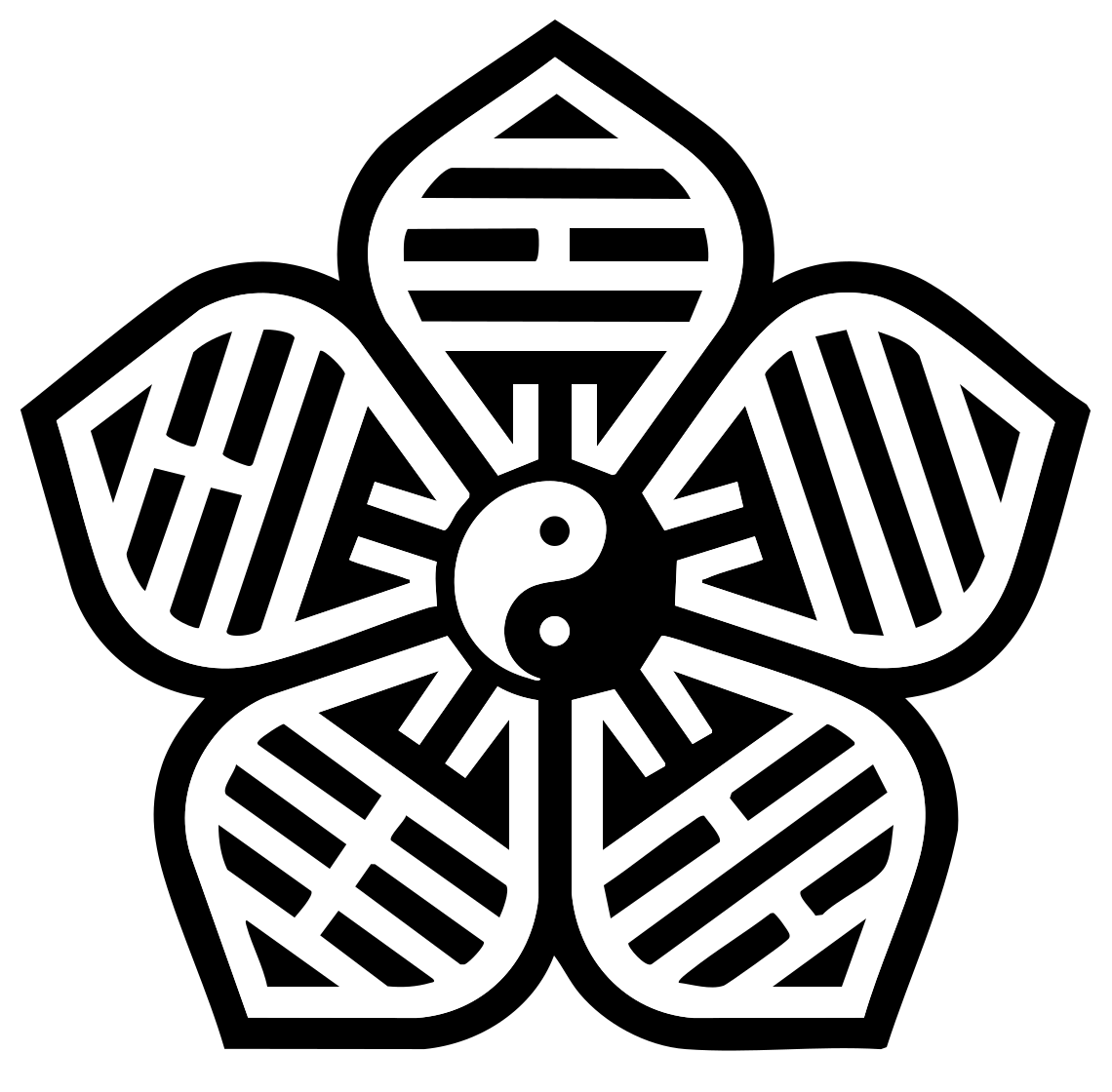
Trigram breakdown
Upper · Water · 坎
Yang held inside two yins. The hidden current; danger and depth at once.
Lower · Wind · 巽
Yin laid under two yangs. The slow press of penetration, gentle to the point of inevitability.
Judgment
The well does not move, yet everything depends on it. Water rises through wood to reach those who need it, not by force but by the structure that allows ascent. This hexagram describes a resource that is constant and deep, but only useful when the vessel is intact and the drawing is done with care. The essential demand here is maintenance: the source cannot fail, but access to it can.
Image
Water held above wood, the ancient image of a well shaft lined with timber to keep the walls from collapsing. The wood does not create the water but makes it reachable, which is the entire point. To sustain what nourishes others, you must tend the structure that connects depth to surface.
Essence
Character
This person is steady, deep and quietly useful. Others bring them questions, troubles and half-formed confessions, and they answer without much show. Their calm does not shift with the mood of the room. That reliability is the gift. People leave lighter and rarely think to ask why. The cost is that they get used without being known. They hand out clarity and say little about their own state. They skip their own upkeep because the supply seems endless. Then they run low, and no one sees it coming, least of all them. The turn is small. They treat their own walls as part of the work. Tending themselves is how the water stays clean.
With other people
Among others, this person does not push forward or announce themselves. They wait, and people come. They listen fully and answer plainly. Others feel safe around them and slowly come to expect them to be available. That expectation rubs when they go quiet or empty. What makes people glad of them is a small habit: they remember what was said last time and ask how it turned out.
Water over Wind
Inner Wind works its way down patiently, into every crack, while outer Water holds deep and still above, so the person reaches far without ever seeming to move.
The six lines
Hexagram 48 Line 1 (48.1)
A yin line at the base of the well points to a source that has gone neglected for too long. The water is muddy, the shaft has silted up, and no one comes to draw from it anymore. Before any nourishment can flow, the foundational work of clearing and restoration must happen.
Hexagram 48 Line 2 (48.2)
Yang strength in the second position has the capacity to draw water, but something is broken in the mechanism. The jar leaks, the rope is too short, the bucket has no bottom. Real capability going to waste because the tools of access have not been maintained.
Hexagram 48 Line 3 (48.3)
Here is a well that has been cleared and is ready, its water clean and available, but no one is using it. A yang line in this transitional position describes a resource fully capable of giving but overlooked or forgotten by those who need it most. The frustration is real and the remedy is recognition, not more preparation.
Hexagram 48 Line 4 (48.4)
A yin line in the fourth position describes a well being relined, the shaft reinforced, the structure rebuilt from within. This is not a time of giving out but of going inward to repair. No water is drawn during renovation, and that temporary withdrawal of service is itself an act of responsibility.
Hexagram 48 Line 5 (48.5)
The ruler's line is yang and clear, and the well is at its best here. The water is cold, clean, and deep, and the structure holding it is sound. This is the hexagram's moment of full function, where what is offered meets what is needed without obstruction or waste.
Hexagram 48 Line 6 (48.6)
The top of the well is where the water finally reaches the open air, and a yin line here describes that moment of uncovered, freely available nourishment. The well is not capped or withheld but open to all who approach. This is the culmination of the hexagram's entire logic: depth made accessible, sustenance offered without condition.
Keywords:
- nourishment
- shared resource
- depth
- maintenance
- access
Relationships
Opposite
Biting Through
The hexagram with every line flipped - its energetic mirror.
Inverse
Oppression
The hexagram read from the top down - its reverse-perspective.
Reverse
Dispersion
The hexagram with upper and lower trigrams swapped - the inside turned out.
Nuclear
Opposition
The hexagram built from the inner four lines (2-3-4 below, 3-4-5 above) - its inner architecture.
Family
The eight-hexagram palace it belongs to - kin generated by sequential line changes from a pure-trigram source.
Gate 48 in Human Design
In Human Design, Hexagram 48, The Well, is Gate 48, with the same six lines. It sits in the Spleen Center, and its one channel connects it to Gate 16 in the Throat Center. How to read your gates in the I Ching
The reading goes further down
What you have read here is the shape of Hexagram 48, 'The Well'.
Underneath it sit four more: the mechanic that drives it, the shadows it casts, the way through them, and the tension between Water and Wind that never quite settles.
And if this hexagram appeared in your Birth Hexagram Triad, one of its six lines is changing. That line is your growth edge, named out loud.